Lemonbrand
Join
Be aware / buying AI responsibly

Know what you are handing over.

Eight practical questions to ask before an AI system gets access to your business. Use them with us or any other technical partner.
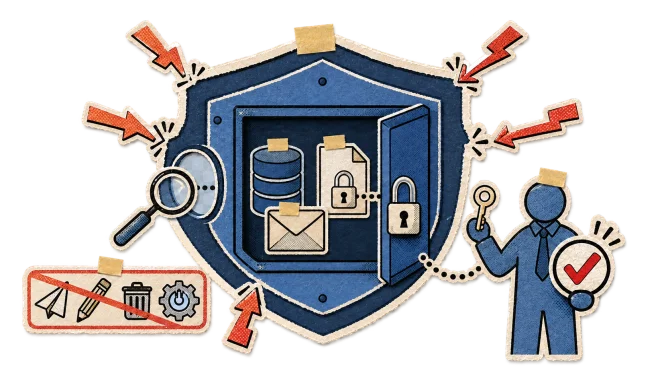
A shield protecting a set of records

The buyer’s checklist

Clear boundaries make better systems.

01

Agree on data access before connecting anything.

Name the systems involved, the data needed, who can see it, and what happens when the engagement ends. Review the data-processing agreement before work starts.

Put it into practiceWho can grant access, and who can revoke it?

02

Keep your options open.

Models, providers and prices change. Separate your business knowledge and workflow rules from the model so a change does not require starting over.

Put it into practiceWhat would it take to change providers?

03

Treat permissions as part of the design.

A useful agent does not need access to everything. Decide what it can read, draft and change, then test the boundaries before it handles live work.

Put it into practiceWhat is the most consequential action this system can take?

04

An audit and a running system need different access.

An audit examines agreed evidence. A live workflow may need an ongoing connection. Make that change in responsibility explicit rather than assuming the audit permission covers it.

Put it into practiceWhat stays connected after launch, and why?

05

Start where a person can check the work.

Drafts, internal reports and review queues make mistakes easier to spot. Agree which decisions stay with a person before introducing customer-facing automation.

Put it into practiceWho reviews exceptions before they reach a customer?

06

Choose the channel for the job.

A convincing voice demo is not evidence that a phone workflow is ready. Test real conversations, handoffs and failure cases. Text may be a better first step.

Put it into practiceCan the team inspect and correct the output?

07

A licence is not an adoption plan.

People need a defined task, usable information and someone accountable for the result. Start with one recurring workflow instead of asking everyone to figure AI out alone.

Put it into practiceWhich weekly task will change, and who owns that change?

08

Use the smallest system that solves the problem.

Sometimes an existing tool and a clear working routine are enough. A custom build should earn its place through the work it removes and the responsibility it can safely take on.

Put it into practiceCould a simpler setup produce the same useful result?

Data and responsibility

Make the working agreement explicit.

Understand how scope, access and human review are agreed before a project begins.